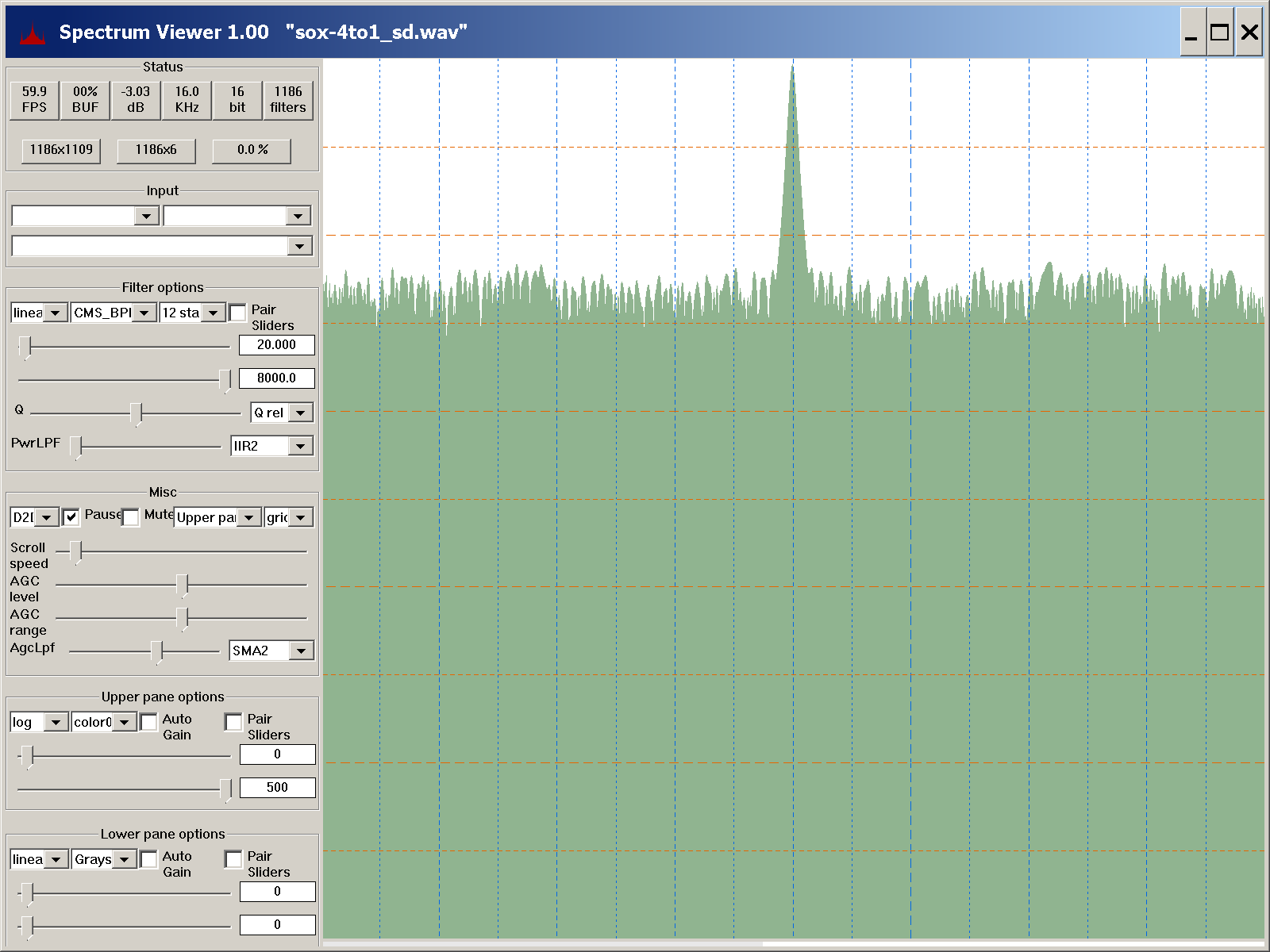
First example: sine wave with frequency 1/4th sampling rate. When the sine frequency is 1/3, 1/4, or 1/6 the sampling rate, harmonics due to rounding loss are not present. All sample bit depths produce a single harmonic. A single rounding loss occurs, and it has a slight effect on the level of the single harmonic. Dithering hides the unusual lack roundoff loss harmonic noise. Hover the mouse over the image to see the undithered spectrum:
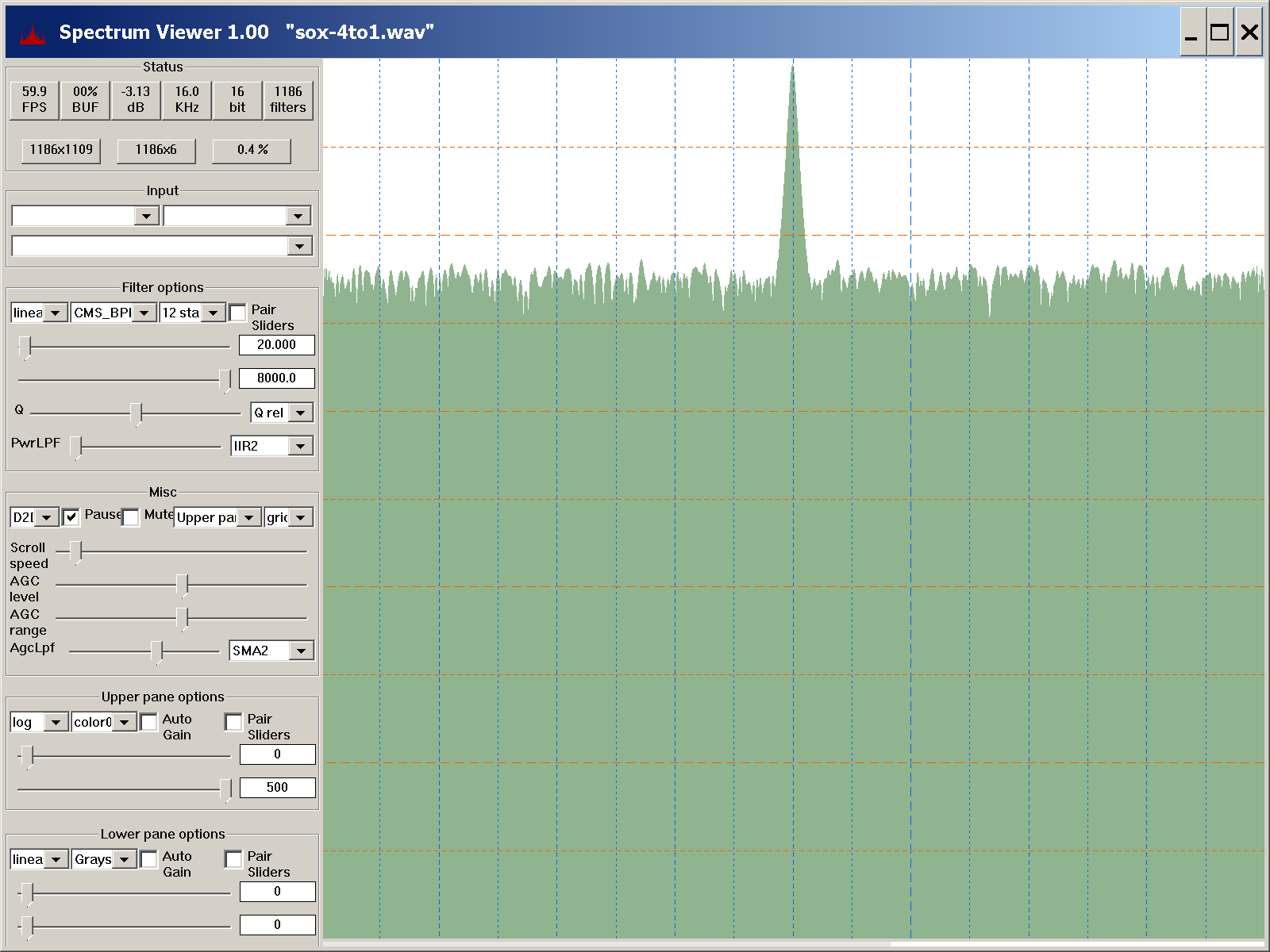
Second example: sine wave with frequency 1/5th sampling rate. When the sine frequency is 1/5 (or 1/10) the sampling rate, one harmonic due to rounding loss is present. This makes the undithered spectrum quite uneven. Dithering hides the unusually large roundoff induced second harmonic. Hover the mouse over the image to see the undithered spectrum:
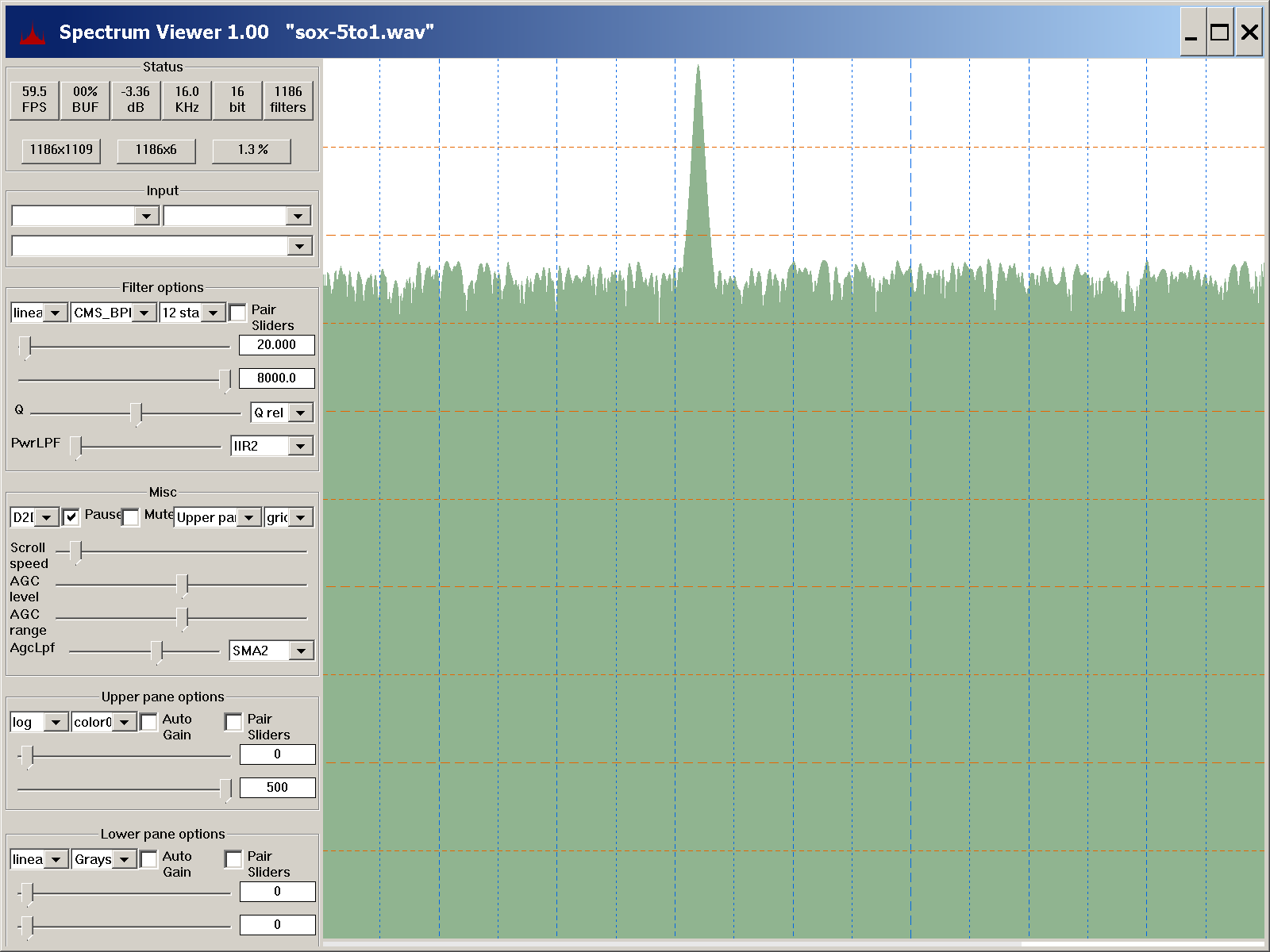
Third example: Self-dithering. Many sample per cycle ratios have a 'self-dithering' property. For example, a sine frequency of 1/4.001 the sampling rate. Hover the mouse to compare 4 samples per cycle to 4.001 samples per cycle: